

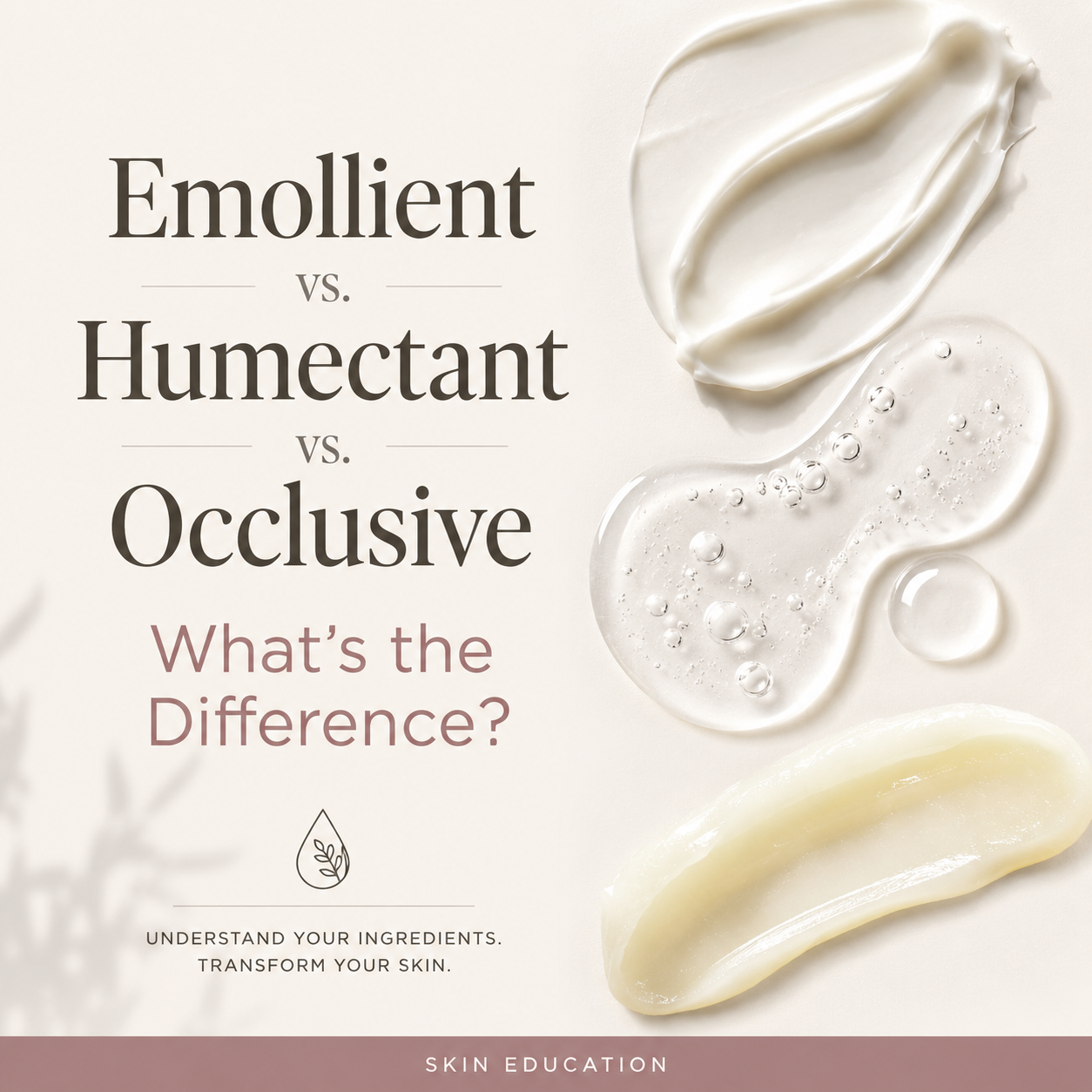
When reading skincare ingredient lists, you may come across terms like humectants, emollients, and occlusives. While they all help keep your skin hydrated, they work in very different ways. Understanding the role of each can help you choose products that best suit your skin type and concerns.
Let’s break them down.
Humectants: The Water Magnets
Humectants are ingredients that attract and bind water to the skin. They draw moisture from the deeper layers of the skin and, in humid environments, can even pull water from the air.
They help:
- Increase skin hydration
- Plump the appearance of fine lines
- Improve skin softness
- Support a healthy skin barrier
Common Humectants
- Hyaluronic Acid
- Glycerin
- Sodium PCA
- Panthenol (Provitamin B5)
- Aloe Vera
- Betaine
- Urea
- Honey
Best for: All skin types, especially dehydrated skin.
Tip: Humectants work best when followed by an emollient or occlusive to help keep the moisture in the skin.
Emollients: The Skin Smoothers
Emollients soften and smooth the skin by filling the tiny gaps between skin cells. They improve skin texture, reduce roughness, and help repair the skin barrier.
They help:
- Soften dry, rough skin
- Improve skin flexibility
- Reduce flaking
- Strengthen the skin barrier
Common Emollients
- Squalane
- Jojoba Oil
- Shea Butter
- Ceramides
- Fatty Alcohols (Cetyl Alcohol, Cetearyl Alcohol)
- Caprylic/Capric Triglyceride
- Dimethicone
Best for: Dry, normal, mature, and sensitive skin.
Unlike humectants, emollients don’t attract water, they make the skin feel softer and smoother.
Occlusives: The Moisture Sealers
Occlusives create a protective barrier on the surface of the skin to reduce transepidermal water loss (TEWL). They help lock in hydration that is already present.
They help:
- Prevent moisture loss
- Protect a damaged skin barrier
- Reduce dryness and irritation
- Support overnight skin repair
Common Occlusives
- Petrolatum
- Mineral Oil
- Lanolin
- Beeswax
- Dimethicone
- Shea Butter
- Plant Waxes
Best for: Very dry, compromised, or mature skin.
Occlusives are especially helpful during winter or when the skin barrier is weakened.
The Perfect Hydration Routine
For healthy, well-hydrated skin, these three ingredient groups work best together.
- Humectant → Draws water into the skin.
- Emollient → Smooths and softens the skin.
- Occlusive → Locks moisture in and reduces water loss.
Think of it like this:
- Humectant: Brings water in
- Emollient: Repairs and smooths
- Occlusive: Seals everything in
Which Ingredients Are Best for Your Skin?
Oily Skin
Look for lightweight humectants and non-greasy emollients.
- Hyaluronic Acid
- Glycerin
- Sodium PCA
- Squalane
- Lightweight Silicones
Dry Skin
A combination of all three categories works best.
- Hyaluronic Acid
- Glycerin
- Ceramides
- Shea Butter
- Petrolatum (at night if needed)
Sensitive Skin
Barrier-repairing ingredients are ideal.
- Panthenol
- Ceramides
- Squalane
- Dimethicone
- Colloidal Oatmeal
Can One Ingredient Belong to More Than One Category?
Yes! Some ingredients have multiple functions.
For example:
- Dimethicone acts as both an emollient and an occlusive.
- Shea Butter softens the skin like an emollient while also helping reduce moisture loss like an occlusive.
This is why many moisturizers provide hydration, softness, and protection all in one formula.
Final Thoughts
Healthy skin hydration isn’t about using just one type of ingredient. The most effective moisturizers combine humectants to attract water, emollients to smooth the skin, and occlusives to seal in moisture. Together, they help maintain a strong skin barrier, improve skin comfort, and leave your complexion looking healthy, soft, and radiant.
Whether your skin is oily, dry, sensitive, or combination, understanding these three categories makes it much easier to choose skincare products that truly meet your skin’s needs.


