

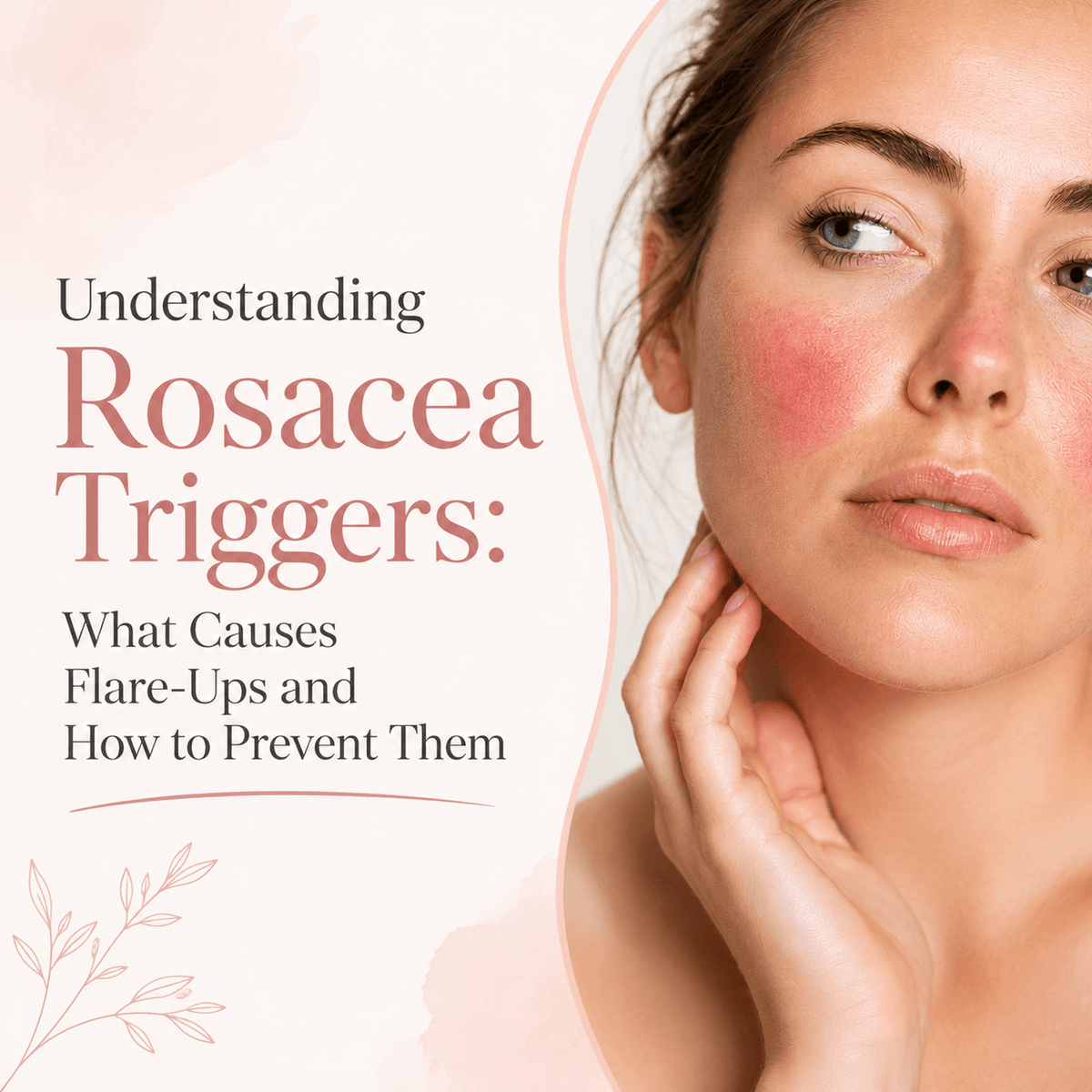
Rosacea is a chronic inflammatory skin condition that primarily affects the central face: cheeks, nose, chin, and forehead. It often presents as persistent redness, visible capillaries, flushing, and in some cases, acne-like breakouts.
While rosacea cannot be completely cured, it can be effectively managed and understanding your personal triggers is one of the most important steps in controlling flare-ups.
What Are Rosacea Triggers?
Rosacea triggers are internal or external factors that cause blood vessels in the skin to dilate, leading to flushing, inflammation, and increased sensitivity. Triggers vary from person to person, which is why identifying your own patterns is essential.
Below are the most common culprits.
1. Heat & Temperature Changes
Heat is one of the most frequent rosacea triggers. It increases blood flow to the skin, intensifying redness and flushing.
Common heat-related triggers:
- Hot weather
- Saunas and steam rooms
- Hot showers
- Intense workouts
- Sudden temperature shifts (cold outdoors → warm indoors)
Tip: Choose lukewarm water, avoid overheating, and allow your skin to cool gradually.
2. Sun Exposure
Ultraviolet (UV) radiation is one of the strongest and most consistent rosacea triggers. Even short periods of sun exposure can worsen inflammation and cause prolonged redness.
Prevention strategy:
- Daily broad-spectrum SPF 30+
- Prefer mineral sunscreens (zinc oxide, titanium dioxide)
- Wear hats and seek shade
Sun protection is not optional for rosacea-prone skin - it is essential.
3. Food & Beverages
Certain foods stimulate circulation and trigger flushing.
Most common dietary triggers:
- Alcohol (especially red wine)
- Spicy foods
- Very hot beverages
- Caffeine (for some individuals)
Not everyone reacts to the same foods. Keeping a food journal can help identify personal sensitivities.
4. Emotional Stress
Stress increases inflammatory mediators in the body and can significantly worsen rosacea symptoms.
Triggers include:
- Anxiety
- Embarrassment
- High-pressure situations
- Emotional distress
Incorporating stress-management techniques like breathing exercises, walks, or mindfulness practices can reduce flare frequency.
5. Skincare Products
Rosacea skin has a compromised barrier, making it more reactive to harsh ingredients.
Common cosmetic triggers:
- Alcohol-based products
- Fragrance and essential oils
- Menthol, peppermint, eucalyptus
- Harsh exfoliants
- Overuse of strong acids or retinoids
Less is more when managing rosacea. Gentle, barrier-supportive products are key.
6. Environmental Factors
External environmental stressors can aggravate sensitive skin.
These include:
- Wind
- Extreme cold
- Dry indoor heating
- Pollution
Protective skincare and barrier creams can help shield the skin.
Why Identifying Your Personal Triggers Matters
Rosacea is highly individual. What causes a flare for one person may not affect another. Tracking your symptoms can help you notice patterns.
Consider noting:
- Weather conditions
- Foods consumed
- Skincare used
- Stress levels
- Duration of flare-ups
Over time, this information becomes incredibly valuable in preventing future reactions.
Rosacea management is not about eliminating everything, it’s about understanding your skin and supporting it consistently.
By minimizing triggers, strengthening the skin barrier, protecting from sun exposure, and choosing calming skincare ingredients, flare-ups can become significantly less frequent and less intense.
Healthy rosacea-prone skin is absolutely achievable with the right approach and awareness is the first step.


