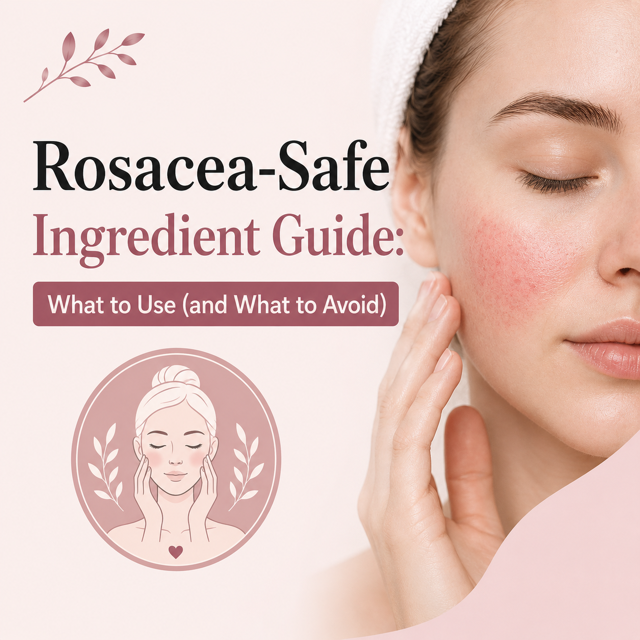
Rosacea-prone skin requires a thoughtful, gentle approach. It’s not about using more products, it’s about using the right ingredients that help repair the skin barrier, calm inflammation, and minimize common triggers.
If you struggle with redness, flushing, sensitivity, or rosacea-related bumps, this guide will help you choose skincare that supports your skin instead of stressing it.
Why Ingredient Choice Matters for Rosacea
Rosacea is associated with a weakened skin barrier and chronic inflammation. When the skin barrier is compromised, it becomes more reactive to common triggers such as sun exposure, heat, wind, harsh active ingredients, and fragranced products.
The goal of a rosacea-safe skincare routine is to:
- Strengthen the skin barrier
- Reduce inflammation
- Minimize irritation
- Help prevent flare-ups
- Protect against UV damage
Let’s break down what that looks like in practice.
Barrier-Repair Ingredients (Daily Essentials)
Barrier repair is the foundation of rosacea care. Without a healthy skin barrier, even beneficial ingredients can cause stinging or irritation.
Key Ingredients to Look For:
-
Ceramides - Help restore and protect the skin barrier by replenishing essential lipids.
-
Cholesterol & Fatty Acids -Work alongside ceramides to repair and strengthen a compromised skin barrier.
-
Squalane - A lightweight, non-irritating emollient that softens the skin and helps reduce moisture loss.
-
Glycerin - A gentle humectant that attracts water to the skin without causing irritation.
-
Hyaluronic Acid - Provides lightweight hydration, making it ideal for sensitive, redness-prone skin.
-
Panthenol (Pro-Vitamin B5) - Supports barrier repair while helping soothe irritation and discomfort.
Best for: Dry, sensitive, and barrier-compromised rosacea-prone skin.
Soothing & Anti-Inflammatory Ingredients
Once the skin barrier is supported, calming inflammation becomes the next priority.
Ingredients That Help Reduce Redness
- Niacinamide (2–5%) - Helps strengthen the skin barrier and visibly reduce redness. Lower concentrations (2–5%) are generally better tolerated by rosacea-prone skin.
- Azelaic Acid (5–15%) - Considered a gold-standard ingredient for rosacea. It helps reduce redness, visible bumps, and uneven skin texture.
- Centella Asiatica (Cica) - Helps soothe inflammation and supports the skin’s natural healing process.
- Allantoin - Calms irritated skin and promotes skin recovery.
- Panthenol (Pro-Vitamin B5) - Helps reduce irritation while strengthening the skin barrier.
- Colloidal Oatmeal - Provides anti-inflammatory and anti-itch benefits, making it especially helpful during flare-ups.
- Green Tea Extract - Offers antioxidant protection while helping calm visible redness.
- Chamomile Extract - Helps soothe sensitive skin and reduce visible signs of irritation.
Best for: Flushing, sensitivity, papules, and pustules.
Antioxidants & Redness Reducers (Use If Tolerated)
Antioxidants can benefit rosacea-prone skin, but they should be introduced gradually.
- Vitamin C
- Resveratrol
- Ferulic Acid
These antioxidants help protect against environmental stressors and reduce oxidative damage. However, higher concentrations may cause stinging or irritation in sensitive skin.
Always patch test new products and introduce them slowly.
Gentle Skin Antiseptic
Hypochlorous Acid
Hypochlorous acid helps reduce bacteria on the skin while calming irritation. It can be especially helpful for rosacea-prone skin that is sensitive or experiencing flare-ups.
Sunscreen: The Most Important Step
Sun exposure is one of the top rosacea triggers.
Daily SPF is non-negotiable.
The Best Choice for Rosacea
Mineral (physical) sunscreens containing:
- Zinc Oxide
- Titanium Dioxide
These filters are generally better tolerated by many people with rosacea than chemical UV filters, especially if the skin is highly sensitive or prone to flare-ups.
Look for formulas that are:
- Fragrance-free
- Alcohol-free
- Designed for sensitive skin
Ingredients to Use With Caution
Some people with rosacea tolerate these ingredients well, while others may find them irritating.
- Lactic acid (low concentrations only)
- Polyhydroxy acids (PHAs)
- Low-strength retinoids (only when the skin barrier is healthy and rosacea is well controlled)
If your skin is currently flaring, it’s best to avoid exfoliating acids and retinoids until the flare-up has settled.
Common Ingredients to Avoid
These ingredients commonly trigger rosacea flare-ups:
- Alcohol (especially denatured alcohol listed high in the ingredient list)
- Fragrance and essential oils
- Sulfates (such as SLS and SLES)
- Strong exfoliating acids (high-strength glycolic acid, lactic acid, or salicylic acid)
- Menthol, peppermint, and eucalyptus
- Harsh physical scrubs
- Witch hazel (especially alcohol-based formulas)
- High-strength retinoids
- High concentrations of pure L-ascorbic acid (Vitamin C), which may sting and worsen redness
Even if a product is labeled “natural,” it can still irritate rosacea-prone skin.
Final Thoughts
Managing rosacea isn’t about aggressive treatments, it’s about consistency, gentleness, and supporting the skin barrier.
Focus on:
- Repairing first
- Calming second
- Protecting daily
Over time, using the right ingredients consistently can reduce skin reactivity, strengthen the skin barrier, and help minimize flare-ups.
If you’re building a rosacea-friendly skincare routine, keep it simple: start with a gentle cleanser, moisturizer, and mineral sunscreen. Once your skin is comfortable and stable, introduce active ingredients slowly and one at a time.
Healthy, comfortable rosacea-prone skin is possible with the right approach.


